Publishing serial fiction chapter by chapter can help a story find its first readers before a finished book exists. It can also create a release treadmill, scatter an audience across platforms, or leave a manuscript that is harder to turn into a book later.
The difference is usually not whether the story is good. It is whether the writer decided what the serial is meant to do before publishing the opening chapter.
Serial fiction is a publishing path, not just a posting schedule. Before you begin, make these five decisions.
1. Decide what job the serial fiction needs to do
Writers often treat all online publishing as the same thing. It is not.
A web-fiction community can help a genre story get discovered through rankings, recommendations, comments, and recurring releases. A subscriber publication can build a direct relationship through email. A platform such as Medium can expose individual essays or extracts to its existing audience. A storefront can sell a finished file directly.
Those are different jobs. One platform may do several of them, but it is unlikely to do all of them equally well.
Choose one primary outcome for the first season of your serial:
➤ Find readers who already enjoy your genre.
➤ Build a consistent writing and release practice.
➤ Test whether the premise sustains interest over time.
➤ Develop a community around an ongoing story.
➤ Lead readers towards a later finished edition.
➤ Earn directly from subscriptions, memberships, or sales.
You can benefit in more than one way, but a primary goal determines what you measure. If discovery is the goal, watch whether new readers reach later chapters. If retention is the goal, watch whether existing readers return. If a finished book is the goal, protect the manuscript structure and leave time for revision after the serial ends.
2. Build a release system you can survive
A serial fiction creates a promise. Readers do not need daily chapters, but they do need to understand the rhythm.
Choose a cadence you can sustain during a difficult week, not the cadence you can sustain during an unusually productive one. A slower reliable schedule usually serves readers better than an ambitious schedule followed by silence.
Before chapter one goes live:
➤ Prepare a buffer of finished chapters.Decide the expected chapter length and release day.
➤ Mark natural season breaks where you can pause without breaking the story.
➤ Keep a private production calendar separate from the public release calendar.
➤ Write a short contingency note now, so an unavoidable delay does not become a disappearance.
Scheduling tools can help, but they do not create the buffer. The buffer is what protects both the story and the writer.
The right size depends on how you write. A discovery writer may need a smaller buffer and more flexibility. A heavy outliner may be comfortable preparing an entire season. The important thing is to know which kind of commitment you are making before readers begin to depend on it.
3. Decide how reader feedback may change the story
Comments are one of web serial fiction's great advantages. They reveal confusion, excitement, pacing problems, favourite characters, and promises readers believe the story has made.
They can also pull a book apart if every reaction becomes a revision instruction.
Set a feedback boundary in advance. A useful rule is:
If several readers are confused at the same point, the confusion is real. Their preferred fixes may still be wrong for the book.
Create three buckets for feedback:
➤ Fix now: continuity errors, broken links, missing context, or factual mistakes that damage the current reading experience.
➤ Watch: pacing, character motivation, or repeated confusion that may need attention in later chapters.
➤ Save for the book: structural changes, new subplots, large cuts, and anything that would force you to rewrite already published chapters.
Keep a private story bible with character facts, timeline decisions, unresolved promises, and changes made after publication. Your future editor, and your future self, will thank you.
4. Protect the work beyond the platform
Every publishing platform can change its terms, features, recommendation system, or business model. It can also close. Amazon ended Kindle Vella in February 2025, even though writers had built stories and readers there.
That does not mean you should avoid platforms.
It means the platform should not be the only place where the work exists.
Before publishing:
➤ Keep the master manuscript in a system you control.
➤ Maintain at least one separate backup.
➤ Read the current publishing and content terms yourself, including how removal works.
➤ Check what licence the platform needs to display and promote the work.
➤ Note any exclusivity requirement before posting the same chapters elsewhere.
➤ Keep records of covers, illustrations, permissions, and collaborator agreements.
➤ Give readers a way to find you again if the platform changes.
Do not confuse a platform licence with ownership. They are related but different questions. You may own the work while granting a platform permission to host, distribute, or promote it. The exact wording, including removal and survival clauses, matters.
If a contract or term is unclear and the rights matter commercially, get qualified advice rather than relying on a summary from another writer or an automated tool.
You'll find Quibble's Publishing Terms here - they include copyright ownership, non-exclusive platform licence, removal, and current author terms.
5. Design the path after the serial
A completed serial is not automatically a finished book.
Serial readers tolerate, and sometimes enjoy, repetition, reminders, episodic arcs, and chapter-end hooks. A book reader may experience the same techniques as drag when reading the whole story in a few sittings.
Plan a separate book pass after the final instalment. That usually means:
➤ Resting the manuscript before rereading it as one continuous work.
➤ Removing repeated setup and unnecessary recaps.
➤ Checking the pacing between episodes and across the whole arc.
➤ Resolving promises that worked weekly but feel incomplete in one volume.
➤ Completing developmental and line or copy editing.
➤ Designing a cover for the book's market, not merely reusing a serial thumbnail.
➤ Formatting and distributing the ebook or print edition through a separate route.
An ISBN identifies a particular published edition or format. It is not required merely to post chapters online, and serial publication by itself does not place a finished book in bookstores or libraries.
Decide what you want the serial to become: a complete work that remains on the platform, the first draft of a revised book, a continuing world supported by members, or the audience foundation for future books. None is automatically better. The mistake is reaching the final chapter without having made the choice.
A simple pre-publication check
Before chapter one, you should be able to finish these five sentences:
1. The main job of this serial is...
2. Readers can expect a new chapter...
3. Reader feedback may change..., but will not change...
4. My manuscript, rights records, and reader connection are backed up in...
5. After the final instalment, I will...
If the answers are clear, you are not merely uploading chapters. You are building a publishing path.
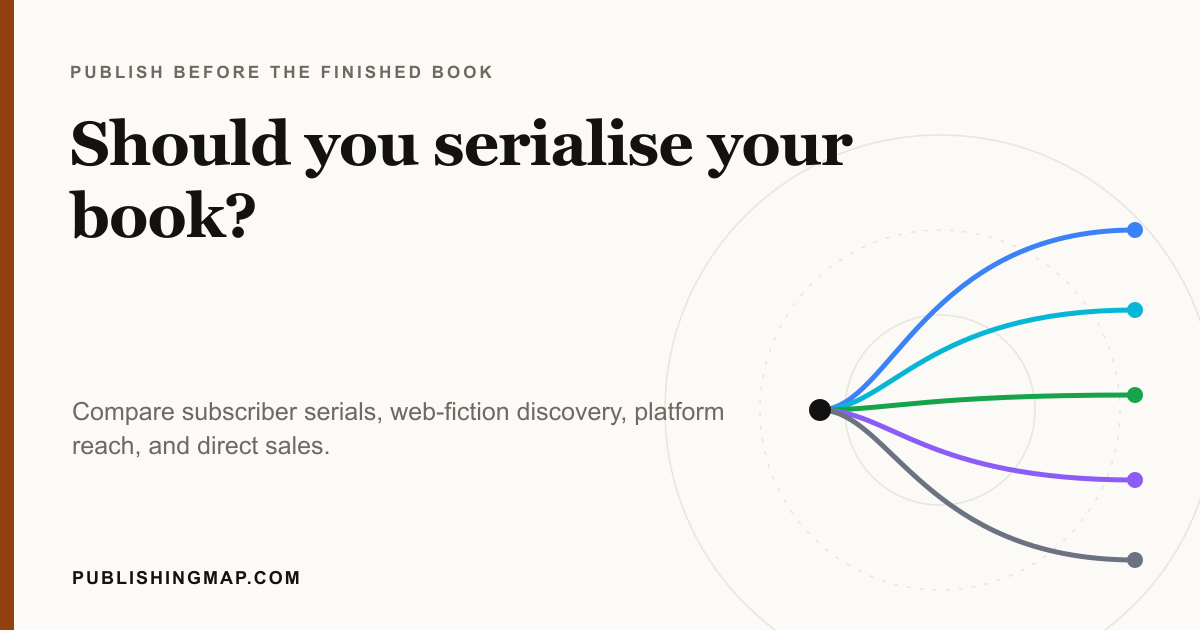
Publishing Map's serialisation guide compares subscriber serials, web-fiction communities, platform discovery, direct sales, and finished-book distribution. The complete map covers every route from an idea to a published book, including costs, timing, rights, tools, and common traps. It is free, cited, and ungated.
Want to write a guest blog post on Quibble? Send your pitch to [email protected].