Every writer knows the feeling. You’ve got a brilliant idea, a world full of possibilities, and approximately 47 ways the story could go. There’s just one tiny problem: turning all of that into something people actually want to read. Or maybe you’re already publishing chapters and wondering how to improve your writing without spending the next five years figuring it all out the hard way.
Either way, we’ve got something special for you today! Quibble has partnered with Jericho Writers, an online writing school and global community offering online writing courses, editorial services, and personalised support for authors.
community that helps authors sharpen their craft, strengthen their manuscripts, and take the next step towards serious publication.
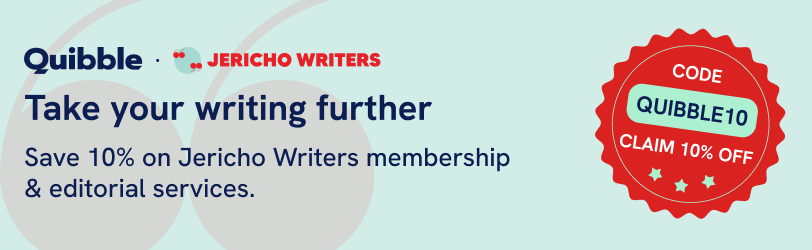
To celebrate, Quibble authors get 10% off Jericho Writers’ editorial services and Premium Membership with the code QUIBBLE10 at checkout.
But this partnership is about more. Let’s talk about writing, the strange things AI can do for it, and the things that still take a bit of work (surprise).
AI Has Made Starting a Story Easier Than Ever
A fantasy novel set in a world where memories can be traded as currency? A murder mystery in which the detective is the only person who remembers the victim? A romance between two people who communicate exclusively through increasingly passive-aggressive grocery lists?
Whatever the idea, AI can help you explore it. You can brainstorm premises, flesh out characters, experiment with dialogue, or ask for a hand when writer’s block has turned your blank document into a monument to procrastination.
You can even use it to explore different points of view or get a rough draft of that opening chapter you’ve been meaning to write since approximately 2023.For aspiring authors, this changes the game.
Ideas that might otherwise have stayed tucked away in someone’s imagination can become actual stories. It’s easier to experiment, get unstuck, and find out whether that weird idea has legs.
And that’s worth celebrating. The more people who get to tell their stories, the better.
But getting a story started and learning to write it well are two very different beasts.
What AI can’t give you is the experience to know which choice serves your story, which character needs more depth, which beautifully written paragraph should probably be cut because it’s bringing the whole thing to a standstill and truly a million other things that make a book "unputdownable."
That’s where you might actually need human support.
Your First Draft is Just the Beginning
A compelling story is more than an interesting premise. It’s knowing when to let a scene breathe and when to get things moving. Building characters readers would happily follow into a disaster of their own making. Writing dialogue that sounds like actual people talking, rather than two characters taking turns delivering exposition.
And, of course, ending a chapter in a way that makes someone say, “Just one more,” at 1:17 a.m. We all know how that goes.
These skills take practice. They develop through reading, writing, revising, experimenting, and learning from feedback. Sometimes, though, you need a fresh pair of eyes - preferably a pair that knows a thing or two about storytelling.
That’s where professional editing can help. Depending on what your manuscript needs, an editor might help you:
1. Fix the big-picture problems. Developmental editing looks at plot, structure, pacing, character arcs, and whether the story holds together as a whole.
2. Make the writing sing. Line editing focuses on sentences, dialogue, clarity, style, and flow.
3. Catch the little things. Copy editing deals with grammar, spelling, punctuation, and consistency - the details that can pull a reader out of an otherwise great story.
Different jobs, different approaches, same general idea: making your manuscript stronger.
Now, before anyone starts worrying that they need to remortgage the house to become a proper writer, let’s be clear. You don’t need to hire an editor to write a novel, publish on Quibble, or start building an audience. Read widely, write regularly, get feedback, and keep at it. There’s no secret editorial handshake required.
But if you’re serious about taking your writing further, professional guidance can help you spot weaknesses you might not see yourself - and, more importantly, understand what to do about them.
Making Your Story The Best It Can Be
The way authors publish has changed dramatically. You no longer need to wait for a traditional publisher to give you the green light before sharing your work with the world.
Platforms such as Royal Road, Wattpad, and Webnovel let writers publish chapter by chapter, find readers, and learn from audience feedback as their stories unfold. For authors building a readership from scratch, that’s a pretty big deal.
But writing a serial isn’t quite the same as writing a manuscript that someone reads from beginning to end in one sitting.You’ve got to keep people coming back. Give them satisfying moments along the way while building towards something bigger. Know when to leave a question unanswered, when to deliver a payoff, and when that cliffhanger is genuinely exciting rather than just a character falling down some stairs before the chapter abruptly ends.
Reader feedback can tell you a lot. Maybe everyone loves your protagonist. Maybe readers are confused about a plot point you thought was perfectly obvious. But there’s a limit to what audience feedback can tell you.
Readers are usually excellent at telling you what they enjoyed, what confused them, and what they want more of. Understanding the underlying craft - why the pacing drags, or why a character’s decision doesn’t feel believable - takes a different kind of expertise.
Meet Jericho Writers
Founded in 2004 by bestselling author Harry Bingham, Jericho Writers has spent more than 20 years helping writers develop their work and navigate the publishing process.
It’s grown into a global online writing school and community offering everything from professional editorial feedback to writing courses and guidance for authors exploring their publishing options.In other words, whether you’re still trying to get a first draft over the finish line or you’ve got a manuscript that’s almost ready to meet the world, there’s support available for different stages of the journey.
Two places worth checking out:
Professional Editorial Services
Ever finished a chapter, read it back, and thought, “Something’s wrong here, but I’ll be damned if I know what”? Sometimes you need someone who can help you figure that out.
Jericho Writers offers a range of editorial services, including manuscript assessments, developmental editing, line editing, copy editing, and reviews of opening sections.
So whether you need someone to look at the bigger picture or get into the nitty-gritty of your prose, you can explore the options and find the kind of feedback that makes sense for your work.
Have a look at the Jericho Writers editorial services to see what’s available.
Premium Membership
Writing can be a lonely business. You spend hours with imaginary people, argue with yourself about plot decisions, and occasionally celebrate finishing a chapter to an audience of exactly zero people. Thankfully, that audience is growing on Quibble, but let’s be honest, it’s still a bit shy!
A community helps, and Jericho has built a large one over the years. Their Premium Membership offers access to writing courses, online workshops, feedback opportunities, a community of fellow writers, and resources to help you navigate the publishing industry.
Find out more about Jericho Writers Premium Membership.
Get 10% Off with Quibble
To celebrate this new partnership, Quibble authors can get 10% off Jericho Writers’ editorial services and Premium Membership.
To claim your discount:
1. Visit the Jericho Writers website.
2. Choose the editorial service or Premium Membership that’s right for you.
3. Enter the code QUIBBLE10 at checkout to receive 10% off.
That’s it. No big scavenger hunt.
Earning From Your Stories
There’s one more thing worth mentioning. Quibble’s new monetization system is coming really soon, and it’ll give authors a new way to earn from their writing. You’ll be able to choose exactly which chapters go behind a paywall, meaning you decide what stays free and when readers can pay to keep going. Your story, your rules.
And unlike some platforms you might know well, you won’t need to sign away your creative freedom to make money from your work.
Of course, you don't need to hire an editor before you can earn a single QUIB. But if you’re serious about your story, it might be worth doing sooner rather than later. Why not give your story the best shot before you start asking readers to pay for the next chapter?
In the meantime, keep writing, keep experimenting, and don’t be afraid to kill your darlings. (Unless your readers are particularly attached to them. In that case, perhaps think twice.)