"Why is no one reading my story?" If you’ve published something you’ve spent weeks, months, maybe years working on, and the reader count barely moves, it’s a pretty brutal question to ask yourself.
Is the story bad? Is the writing bad? Did nobody see it? Did everyone see it and collectively decide that Netflix was the better use of their evening? Was the cover cursed? Did the algorithm quietly bury it in a ditch somewhere? I’ve asked myself these questions more times than I care to admit.
There’s a bigger shift happening underneath the question. The number of people who can create stories has increased dramatically. The amount of time people have to read them hasn’t. The question is, what can you do about it? Turns out, a lot, actually! The future of storytelling is more exciting than ever before.
AI changes what it means to get readers. AI changed publishing forever.
The Advice Writers Have Always Been Given
For a long time, the advice was fairly straightforward: Write a great story. Publish it. Find your audience. The rest, apparently, would take care of itself.
An editor might tell you to work on the manuscript. Improve the opening. Tighten the pacing. Make the characters stronger. Get the book into the right genre. Then, once the book is ready, start marketing it.
None of that is wrong. A great story still matters. More than anything else. But it assumes that the story itself is the main thing competing for a reader’s attention. It isn’t.
Your story is competing with every other story, video, game, podcast, social feed, newsletter and rabbit hole that can occupy the same 30 minutes. And the number of stories entering that competition is about to get much, much bigger.
The Supply of Stories Is About to Explode
Well, technically it has already. AI is making it easier to produce text. That doesn’t necessarily mean everyone will suddenly become a great writer. Writing a genuinely good story is still hard. It probably always will be - at least so we hope.
At the same time, having an idea is easy. There are now thousands of chatbots happy to brainstorm with you until you reach some kind of creative nirvana - or, at the very least, have 47 variations of the same idea open in separate tabs.
The barrier to creating something is falling. That means more people will write. More people will publish. More stories will exist. No-one can argue with that. And that’s a good thing. There are plenty of people with beautiful stories in their heads who have been struggling to string them together. Now they can.
But making somebody care about it for 80,000 words? That's a whole nother matter.
Readers Aren’t Getting More Time
There is one thing AI can’t generate for us: More hours in the day. No prompt, however carefully engineered, is going to make Tuesday contain 31 hours. No chatbot is going to sit beside you at 11:47 p.m. and quietly manufacture three more hours before your alarm goes off. Time remains stubbornly analogue.
This creates a strange imbalance. We are heading toward a world where creating a story becomes easier while getting someone to actually spend time with that story becomes harder. That changes the question for writers entirely. Instead of asking:
"Why is no one reading my story?" or “How do I write a story people will like?”
Authors will invariably need to ask:
“How else can I differentiate myself in this new world?”
The Story Can’t Be the Whole Experience Anymore
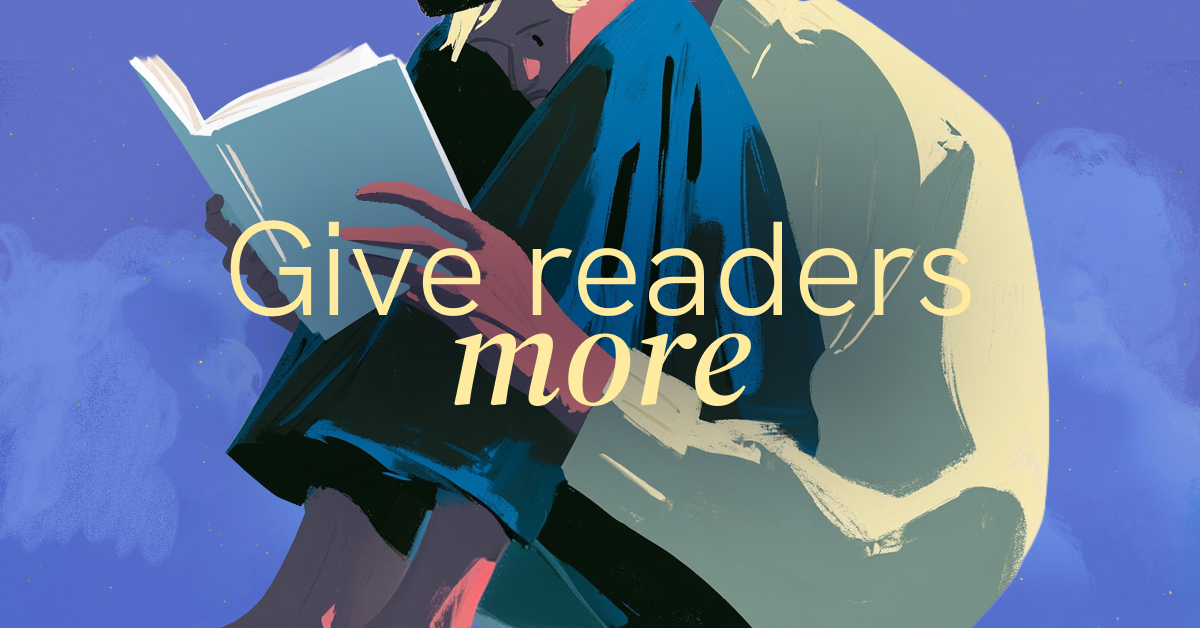
It means recognizing that a story can give readers more places to go.
Think about what happens when someone really falls for a fictional world. Yes, they absolutely want another chapter immediately, but what else do they want? They might want to know more about a character. Look at the map. Read a side story. See how the author came up with something. Talk about a theory with another reader. Look at artwork. Discover some piece of lore that wasn’t necessary to understand the main plot but makes the whole thing feel labyrinthine.
Some readers will want none of that. But others will happily disappear down the rabbit hole. And that’s your opportunity as a writer.
The “more” doesn’t mean turning yourself into a content factory and churning out lore until both you and your readers lose the will to live. It means giving people more doors into the world you’ve already built. Some will walk through one and leave. Others will open every door they can find, discover a secret staircase, and wonder where the hell they’ve ended up.
The Next Generation of Storytellers Won’t Just Publish Stories
They’ll build worlds around them. That might maps readers can explore, lore they can uncover, side stories they can disappear into, artwork they can collect, or communities they can become part of.
The writer’s job is still to tell a great story. That part isn’t going anywhere. But the story will no longer be the only place the audience can go.
And that’s the fun part. You don’t have to stop at “The End.” You can keep going. Open another door. Hide something under the floorboards. Give readers a character they become weirdly obsessed with. Leave a few breadcrumbs and watch them run off into the woods looking for answers.
Your story is still the heart of it. But now there’s a whole world around it waiting to be built.